

Protecting Elmwood Park from the Emerald Ash Borer
The West Fargo Park District is preparing for one of the most significant threats to our trees: the Emerald Ash Borer (EAB). Learn what it means for Elmwood Park, the steps we’ve already taken, and what comes next.
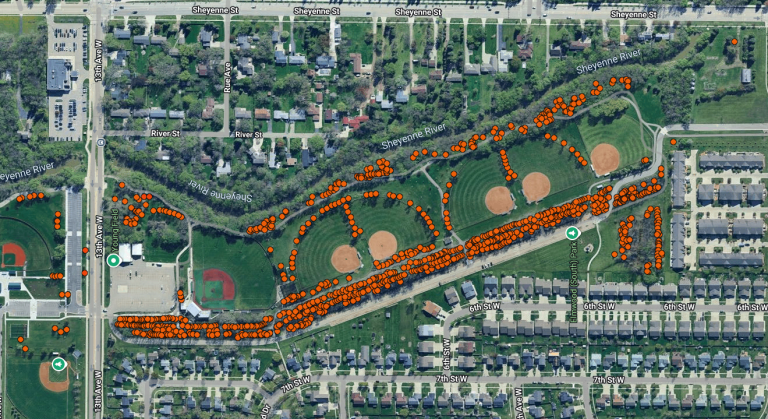
Elmwood Park’s shelterbelt is made up of nearly 90% Green Ash trees. Each orange dot in the image above is an Ash tree.
What is the Emerald Ash Borer?
The Emerald Ash Borer Beetle (EAB) is a destructive, invasive insect native to Asia. It kills all true North American Ash trees by feeding on the inner bark, which disrupts the tree’s ability to move water and nutrients. As a result, trees become brittle, unpredictable, and eventually die. The beetle has already devastated ash populations in Michigan, Wisconsin, and Minnesota, and was recently discovered in Dilworth, MN, less than 15 miles from West Fargo. Once EAB arrives in an area, it doesn’t leave. It will remain until all available ash trees have been destroyed.
The Emerald Ash Borer is a destructive, invasive beetle that kills ash trees by feeding on the inner bark.
Why Elmwood Shelterbelts Are Vulnerable
North and South Elmwood Park shelterbelts are made up of roughly 90% Green Ash trees. Without action, most of these trees will be lost in the coming years, taking away valuable shade, wildlife habitat, and protection from wind.
Without action, the Green Ash trees in Elmwood’s shelterbelts will be lost in the coming years.
What Has Been Done So Far
As of September 2025, the Park District has:
Treated 270 Ash trees in the park system with Mectinite, an insecticide injection that protects trees for three years.
Removed unsafe or declining trees that posed hazards near neighbors, trails, or gathering areas.
Replanted with diverse species to reduce future risks.
Secured state grants to help fund removals and replanting at Meadowridge Park, Pinewood Park, Tintes Park, and South Elmwood Park.
Options for the Elmwood Shelterbelts
To deal with the threat of EAB in Elmwood, there are three possible approaches.
Selective Treatment and Removal
The first step would be to grind out the brush in the shelterbelt, making all tree rows accessible. This would allow forestry staff to evaluate each tree, treating those that are healthy and structurally sound, while removing those that are hazardous or in decline. The cleared understory would also allow sunlight to reach the ground, encouraging new growth and making regular maintenance possible. This approach preserves some existing shade and tree cover, but it would require ongoing treatments and continued monitoring.
Full Removal and Replanting
Another approach is to remove all of the ash trees at once, address drainage issues, and replant the area with a carefully planned mix of diverse species. This is the most expensive option, but it provides the cleanest long-term solution. The tradeoff is that the shelterbelt’s shade would be lost until the new trees mature.
Do Nothing
If no action is taken, the Emerald Ash Borer will eventually kill the Green Ash trees. As they die, they will collapse into the brush, creating a hazardous and unsightly environment that would be difficult to manage and unsafe for park visitors. While this option has no immediate cost, it would leave the area in poor condition and without tree cover in the future.
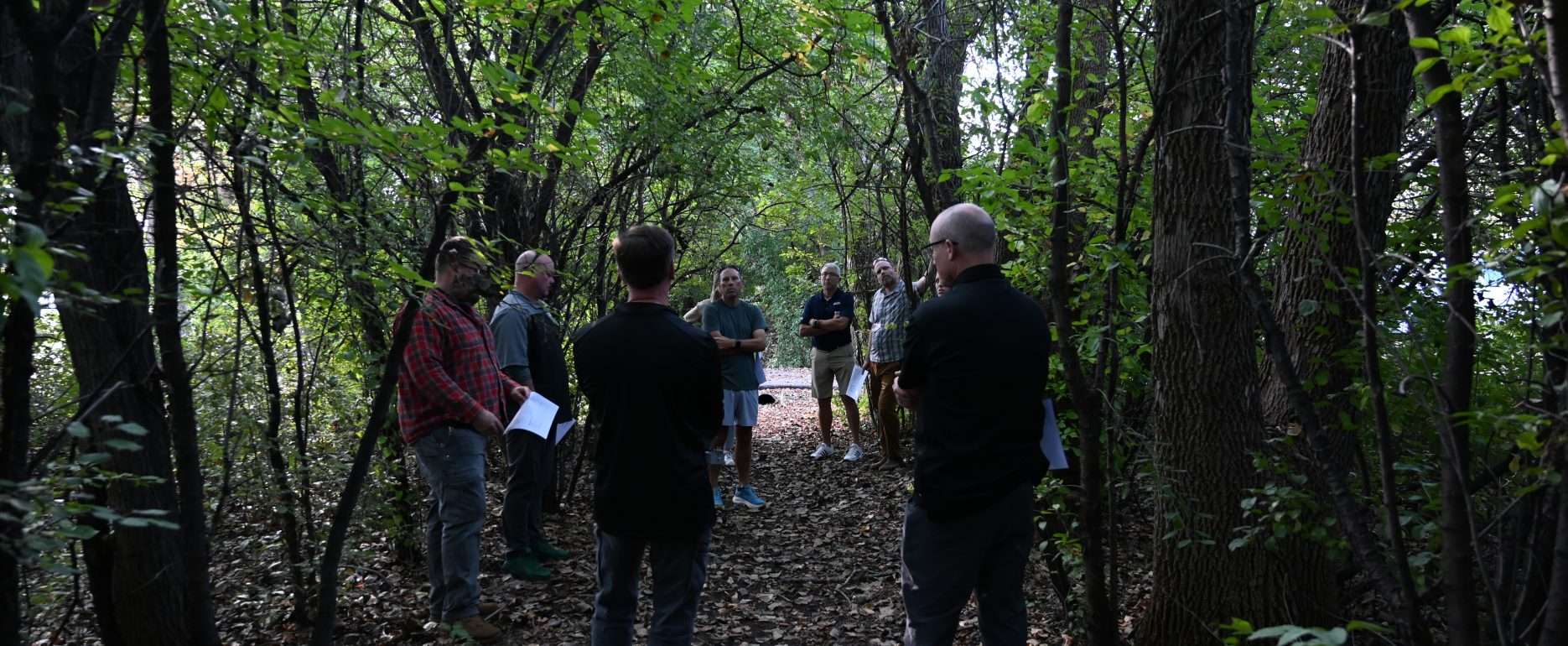
The Park District board and staff are reviewing options for managing the Emerald Ash Borer.
Frequently Asked Questions
Why Act Now?
Green Ash trees dominate the north side of West Fargo. By acting early, we can protect public spaces and avoid the worst impacts seen in other states.
When Will The Emerald Ash Borer Arrive?
We don’t know the exact date, but with EAB already confirmed in nearby communities, we know it’s only a matter of time.
What Will The Project Look Like?
The plan is to preserve the shelterbelt by removing the most at-risk trees, treating others, and replanting with diverse species. This will maintain as much shade and cover as possible during the transition.
How Long Will It Take?
This will be a multi-year project, phased in carefully to balance safety, cost, and shelterbelt preservation.
Looking Ahead
South Elmwood Park is an important part of our community, and protecting the shelterbelt is a priority. While no final decisions have been made, the West Fargo Park District is committed to managing this challenge in a way that balances safety, cost, and long-term tree health.
In the future, we may be looking for help from community volunteers and supporters to move this project forward. For now, we want residents to be informed and aware of the steps being considered. Please stay tuned for updates. We’ll share more information as plans develop and opportunities to get involved become available.
Stay Informed! We’ll share updates on this page as plans develop and opportunities to help become available.
The silver tags on the Ash trees indicate that they have been treated.
